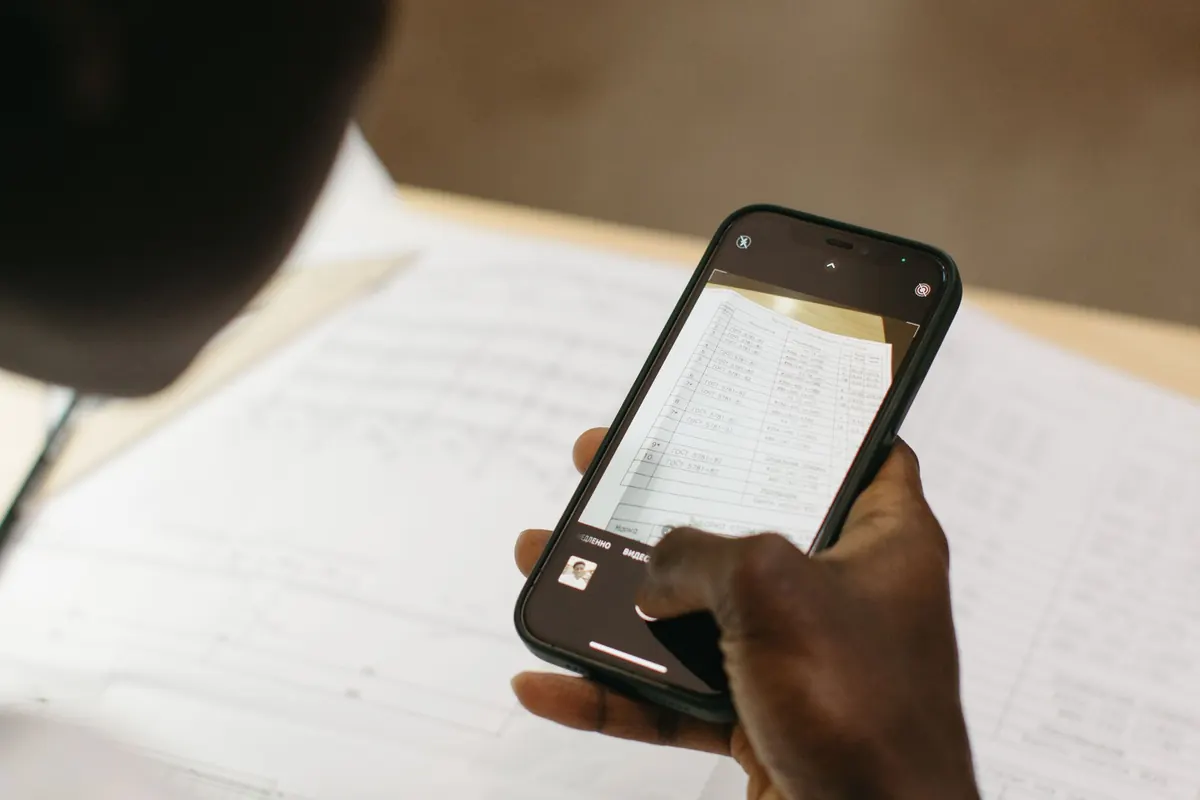
Paper receipts fade, get lost and fill drawers. Digital recordkeeping is generally acceptable for tax purposes when the electronic records are accurate, complete and accessible. The IRS explains what records to keep in its recordkeeping guidance and Publication 583.
What a good record shows
For an expense, the supporting document should show:
- Who was paid
- The amount
- The date
- What was purchased, in enough detail to show the business purpose
For meals, travel, gifts and vehicle use, extra details are needed, such as who attended and the business reason. See travel and meal expense records.
Capture at the moment of purchase
The most reliable system is capturing receipts immediately: photograph or forward them to your bookkeeping system or receipt app the day you buy something. Add a short note about the business purpose while you remember it.
Scanning standards
When digitizing paper:
- Capture the full document, including all edges and totals
- Ensure text is legible
- Use a standard format such as PDF or JPEG
- Avoid editing images in ways that alter content
Naming and folders
If you store files outside an accounting app, use a consistent structure such as Year / Month / Vendor, and filenames that include date, vendor and amount, for example 2026-03-14_OfficeSupplier_84.20.pdf. Consistency makes retrieval fast if questions arise.
Link receipts to transactions
Most accounting systems let you attach receipts to the matching bank or card transaction. That is the strongest form of record: the transaction and its proof in one place. We do this as part of monthly bookkeeping.
Back up everything
Digital records must remain accessible for as long as you need them. Use a reputable cloud service with version history, and periodically export records from apps you might stop using. A receipt app subscription that lapses should not take your records with it.
How long to keep them
Keep records as long as they may be needed for any tax return, generally at least three years, and longer in some situations, such as for assets and employment taxes. See how long to keep business records.
Contracts and important documents
Leases, loan documents, entity formation papers and asset purchase invoices should be kept for as long as they remain relevant, often much longer than routine receipts.
Our bookkeeping services attach receipts to transactions monthly and flag missing ones.
Naming and organizing files
If receipts are stored outside your accounting software, a consistent naming convention makes them findable years later. A common pattern is date, vendor and amount, for example 2026-03-14_OfficeSupplier_84.50.pdf, stored in folders by year and month. Keep a separate folder for asset purchases, since those records must be retained for as long as you own the asset plus the period for the return reporting its disposal.
Back up the folder to a second location, and check periodically that old files still open.
Key terms
Definitions for terms used in this guide, from our small business glossary:
- Assets: Assets are resources a business owns or controls that are expected to provide future economic benefit.